

Submersible Tank Mixing Applications
Water storage tanks are essential to maintaining reliable pressure, supply, and fire protection within drinking water distribution systems. However, without proper mixing, stored water can become stagnant and develop stratification, uneven disinfectant levels, and localized water quality issues. Temperature gradients, sediment accumulation, and short-circuiting can all occur when water is not properly circulated within the tank.
Effective mixing ensures that incoming water is evenly distributed throughout the tank, maintaining consistent disinfectant residuals and preventing the formation of stagnant zones. By promoting full tank turnover and uniform water quality, mixing helps utilities reduce taste and odor issues, limit sediment buildup, and prevent conditions that can compromise both water quality and tank integrity.
Stellar Waterworks' COSMIXERS are designed to maintain reliable circulation within storage tanks, supporting regulatory compliance while protecting critical infrastructure. By keeping water moving, utilities can deliver fresher water to the distribution system while extending the lifespan of valuable storage assets.
Standpipe Solutions
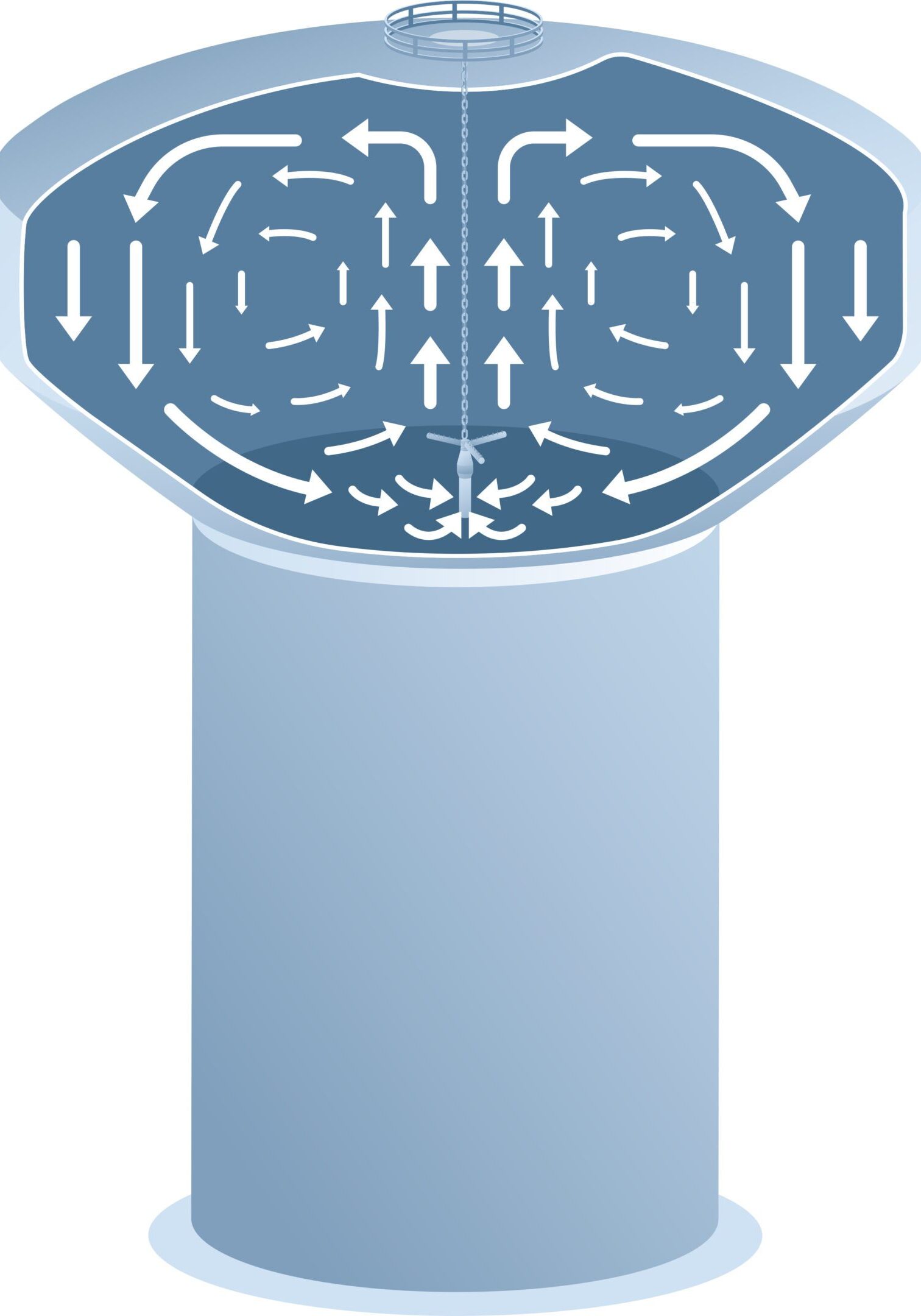
Stellar Waterworks COSMIXERS can be configured specifically for standpipe applications, allowing for flexible and effective mixing across a wide range of tank geometries. In this configuration, the mixer draws water horizontally near the tank floor or vertically from below when positioned higher in the water column—ensuring consistent circulation regardless of installation depth.
Each COSMIXER is capable of mixing water columns exceeding 100+ feet, depending on tank volume and operating conditions. For taller standpipes or higher-volume systems, multiple units can be deployed together to maintain complete, uniform mixing throughout the entire water column.
In smaller-volume, high-column standpipes—for example, a 500,000-gallon tank with a 100-foot water column—a single mixer is typically sufficient. Installed approximately 20 feet above the tank floor, the unit effectively drives circulation through the remaining 80 feet of water to the surface, maintaining consistent turnover.
In larger, high-volume systems—such as a 7 MG standpipe measuring 130 feet in height and 100 feet in diameter—a multi-unit approach is recommended. A primary mixer is installed at the tank floor, with a second unit positioned at mid-depth. Together, these systems create a continuous, unbroken vertical circulation path from the bottom of the tank to the water surface, ensuring complete mixing and eliminating stratification.
Ice Prevention
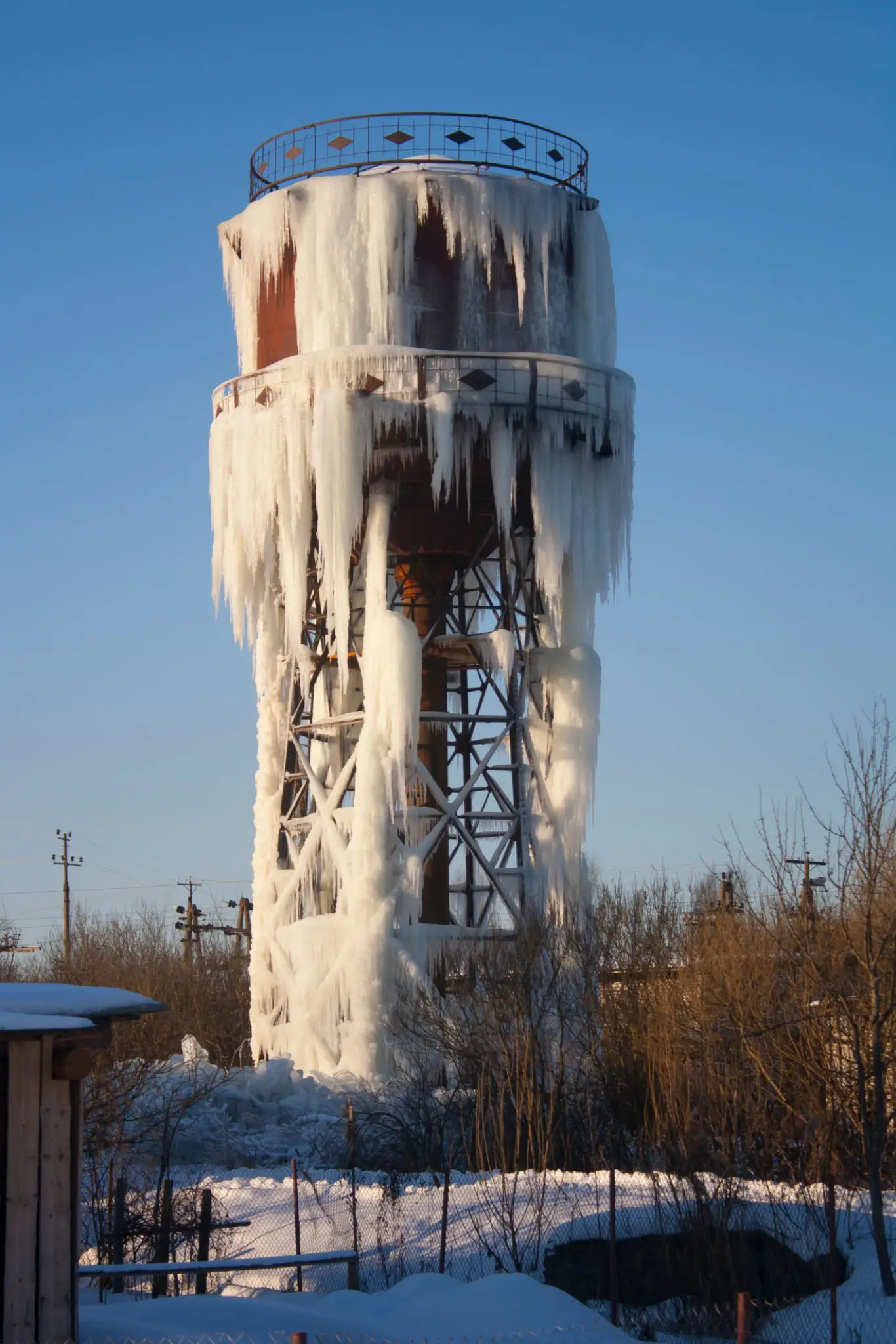
Mixing plays a critical role in preventing ice accumulation during winter by continuously circulating water and eliminating temperature stratification inside the tank. In cold conditions, still water naturally layers, allowing colder water to settle near the surface where ice can begin forming while slightly warmer water remains below. By disrupting this layering, engineered mixing systems maintain a uniform temperature profile throughout the tank, circulating comparatively warmer water upward and helping keep surface temperatures above freezing for longer periods.
Ice prevention is not only about avoiding operational disruptions—it is essential for protecting the tank itself. Thick ice buildup can exert substantial mechanical pressure on tank walls, roofs, and interior structures. Repeated freeze-thaw cycles create expansion stresses that can crack coatings, strain weld seams, damage level sensors, and compromise overflow assemblies. Over time, these forces accelerate corrosion and reduce the structural lifespan of the asset.
By maintaining active circulation during low-usage winter months, mixing minimizes ice build up, reduces structural stress, and protects critical infrastructure. The result is a more resilient storage system designed to withstand harsh seasonal conditions without costly repairs or premature deterioration.
Disinfection Residual Management
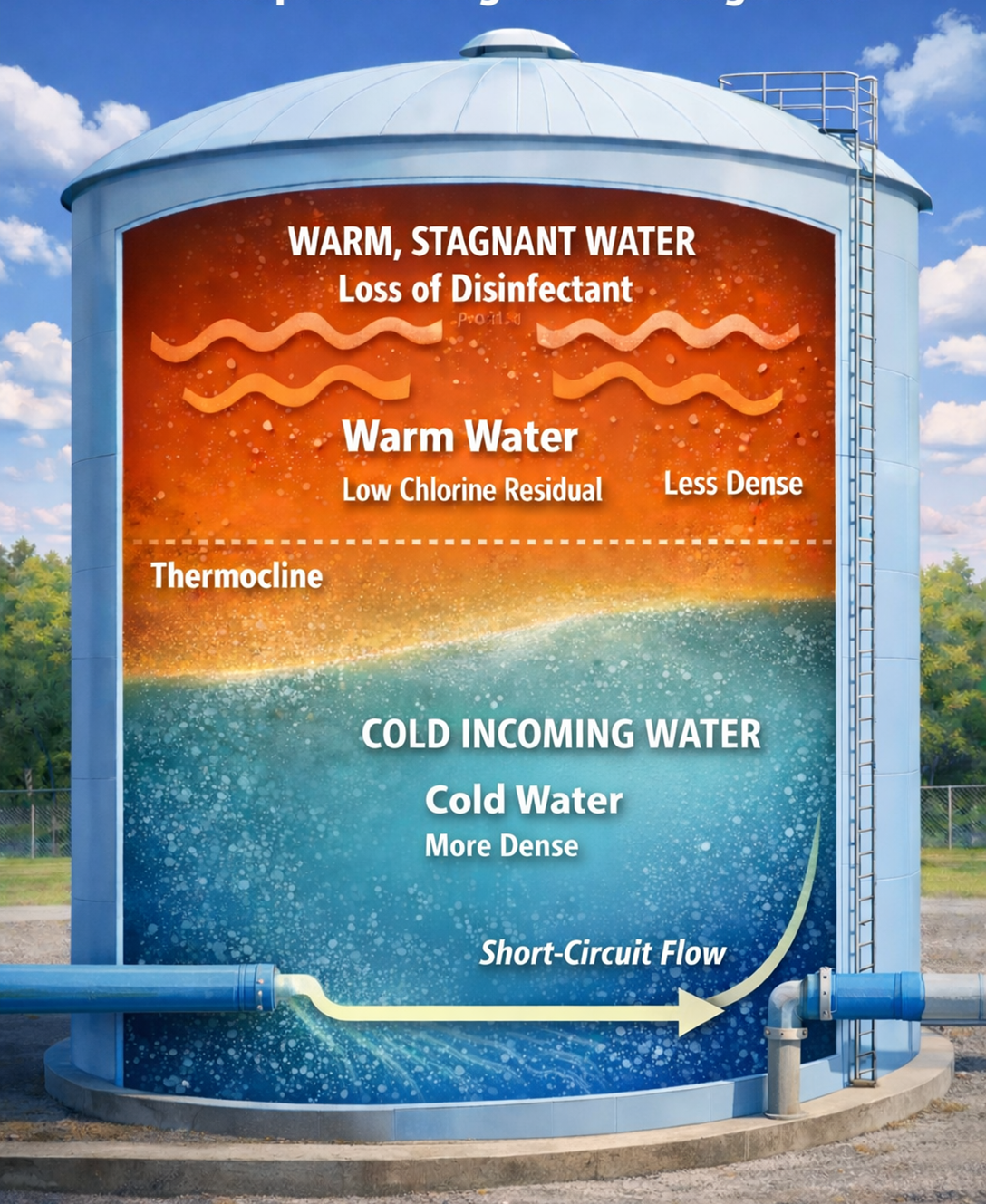
Maintaining a stable disinfectant residual within storage tanks is essential for regulatory compliance and effective pathogen control. In unmixed tanks, water naturally stratifies by temperature, causing disinfectant concentrations—such as chlorine or chloramine—to vary throughout the water column. Warmer upper layers often experience accelerated disinfectant decay, while cooler lower layers retain stronger concentrations. This imbalance can lead to inconsistent residual levels leaving the tank and create compliance concerns within the distribution system. Engineered mixing eliminates thermal stratification, ensuring a uniform disinfectant residual across the entire tank volume.
Mixing also prevents the formation of stagnant zones where disinfectants dissipate and microbial activity can increase. By continuously circulating water, mixing systems preserve active disinfectant contact throughout the tank and reduce localized decay. During periods of low demand, when storage time increases and residuals naturally decline, active circulation promotes consistent blending of incoming treated water with stored water—helping maintain residual strength and operational predictability.
Additionally, maintaining uniform disinfectant distribution reduces localized high-demand areas that can contribute to accelerated decay and elevated disinfection byproduct formation. Through controlled, consistent circulation, mixing strengthens disinfectant performance, minimizes operational variability, and supports the reliable delivery of safe drinking water. At Stellar Waterworks, we view residual management not as a reactive measure, but as a proactive strategy for distribution system stability and regulatory confidence.

Eliminate Stratification
Stratification in water storage tanks is not limited to temperature differences—it also includes chemical separation within the water column. Thermal stratification occurs when incoming water of a different temperature forms distinct layers, with warmer water rising and cooler water settling below. At the same time, variations in disinfectant concentration, pH, or other treatment chemicals can create chemical stratification, where portions of the tank hold different water chemistry profiles. Together, these layered conditions lead to inconsistent water quality, unpredictable disinfectant performance, and operational instability.
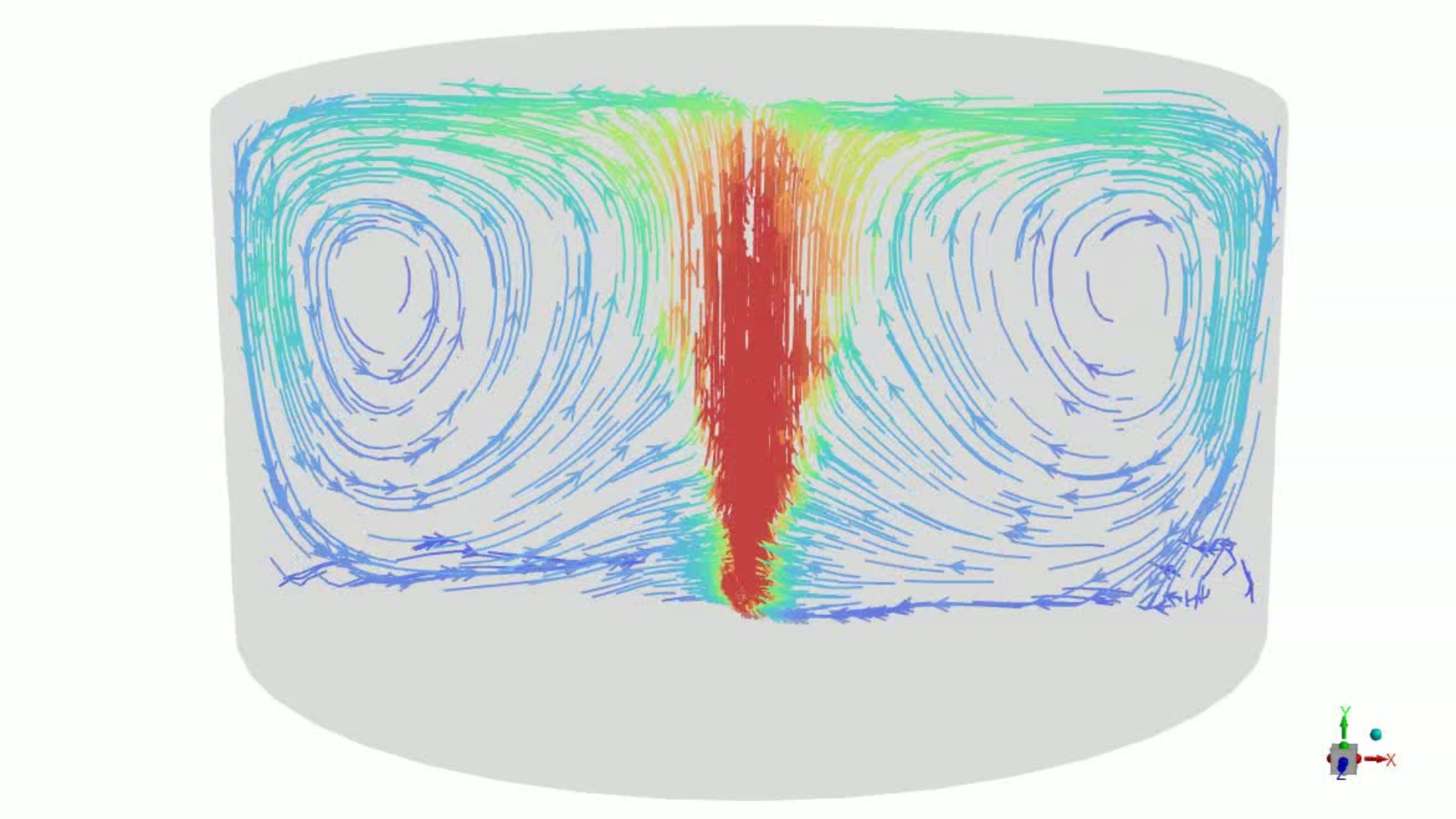
Stellar Waterworks’ COSMIXERS eliminate both thermal and chemical stratification by continuously circulating water throughout the entire tank volume. By establishing induced flow patterns, mixing equalizes temperature and uniformly distributes disinfectants and treatment chemicals from top to bottom. This homogeneity prevents localized high-demand areas, reduces uneven chemical decay, and ensures that water leaving the tank maintains consistent quality characteristics.
When stratification is removed, the storage environment becomes stable and predictable. Monitoring equipment provides more accurate readings, treatment goals are easier to maintain, and operators gain greater control over system performance across seasonal and demand fluctuations. At Stellar Waterworks, we view stratification control as a foundational strategy—because uniform water conditions inside the tank translate directly to reliable water quality throughout the distribution system.
Improve Mixing in Reservoirs
Finished water reservoirs present unique hydraulic challenges compared to elevated storage tanks. Their larger surface areas, shallow depths, and varied inlet and outlet configurations can create zones of low circulation where water movement is minimal. Without intentional mixing, these areas are prone to temperature layering and uneven chemical distribution, particularly during seasonal shifts or periods of fluctuating demand. Over time, this lack of uniformity can compromise water consistency within the reservoir.
Engineered mixing systems improve internal hydraulics by creating controlled circulation patterns that move water across the entire basin. By directing flow horizontally and vertically, mixing disrupts stagnant pockets and promotes uniform temperature and chemical balance throughout the structure. This consistent blending ensures that incoming treated water integrates fully with stored water, maintaining stable conditions from inlet to outlet.
Improved mixing in reservoirs enhances operational control and predictability. Uniform conditions allow for more reliable monitoring data, smoother disinfectant performance, and consistent water quality leaving the facility. At Stellar Waterworks, we design mixing solutions specifically for the geometry and flow characteristics of each reservoir—because effective circulation is not accidental, it is engineered.
Prevent Nitrification
Nitrification is a persistent challenge in chloraminated distribution systems, particularly in storage tanks where water age increases and disinfectant residuals decline. The process begins when ammonia-oxidizing bacteria consume free ammonia, converting it to nitrite and then nitrate. These biological reactions accelerate under warm temperatures, low disinfectant conditions, and extended storage times—environments commonly created by poor circulation and stratification. Left unmanaged, nitrification can deplete chloramine residuals, elevate nitrite levels, and create regulatory and operational concerns.
Our COSMIXERS directly address the root causes of nitrification by eliminating stagnant zones and maintaining uniform water chemistry throughout the tank. Continuous circulation prevents localized disinfectant decay, stabilizes chloramine distribution, and reduces areas where free ammonia can accumulate. By improving tank turnover and promoting consistent blending of incoming treated water with stored water, mixing helps preserve balanced chloramine ratios and limits the conditions that allow nitrifying bacteria to establish and multiply.
Uniform conditions also enhance monitoring accuracy and operational responsiveness. When parameters such as disinfectant residual, ammonia, nitrite, and temperature remain consistent throughout the tank, operators can identify early signs of nitrification more quickly and implement corrective actions with confidence.
Prevent Short Circuiting
Short circuiting occurs when incoming treated water flows directly from the inlet to the outlet of a storage tank or reservoir without fully mixing with the stored volume. Instead of blending uniformly, the water takes the path of least resistance, creating uneven residence times within the structure. This hydraulic inefficiency reduces effective tank turnover, leaves portions of the tank underutilized, and can allow older water to remain in isolated areas for extended periods.
Engineered mixing systems correct short circuiting by creating intentional circulation patterns that distribute incoming water throughout the entire tank. Rather than allowing flow to bypass the stored volume, mixing promotes complete blending and equalizes water age across the structure. This controlled movement improves hydraulic efficiency, ensuring that the full tank volume contributes to system storage and that water leaving the tank reflects the overall quality of the stored supply.
By preventing short circuiting, operators gain greater control over detention time, turnover rates, and overall distribution stability. The tank performs as designed—functioning as an integrated storage asset rather than a partially utilized basin. At Stellar Waterworks, we approach short circuiting as a hydraulic design challenge, implementing mixing solutions that maximize usable volume and support consistent system performance.
Reduce Maintenance and Energy Costs
Water storage tanks are significant infrastructure investments, and their long-term performance depends heavily on internal hydraulic conditions. When water remains stagnant or stratified, sediment can settle, ice can accumulate, and localized corrosion risks increase. Over time, these conditions lead to coating degradation, sensor malfunction, structural stress, and more frequent inspection and repair cycles. Proactive mixing minimizes these stressors by keeping water in controlled, continuous motion.
Engineered circulation reduces sediment accumulation by preventing solids from settling in isolated areas of the tank. It also limits conditions that accelerate corrosion, such as uneven chemical distribution or localized concentration gradients. By maintaining uniform temperature and chemistry throughout the structure, mixing protects interior coatings, level instrumentation, mixers, and structural components from premature wear. This translates to fewer unexpected maintenance events and extended intervals between cleanings and recoating projects.
Reduce THM and DBP Formation
Trihalomethanes (THMs) and other disinfection byproducts (DBPs) form when disinfectants such as chlorine react with natural organic matter in the water. Their formation is influenced by several factors, including disinfectant concentration, temperature, organic content, and detention time. In storage tanks where water becomes stratified or stagnant, localized warm zones and uneven chemical distribution can accelerate reaction rates, increasing the potential for elevated THM and DBP levels. Managing internal tank hydraulics is therefore an important component of DBP control.
Effective mixing minimizes the conditions that promote excessive byproduct formation. By eliminating thermal and chemical stratification, circulation helps maintain uniform disinfectant distribution and consistent water chemistry throughout the tank. Controlled blending reduces localized areas of high reaction potential and limits extended residence times in isolated pockets. Improved turnover ensures that stored water does not remain in the tank longer than intended, helping stabilize DBP formation dynamics.
When internal tank conditions are uniform and predictable, DBP management becomes more controllable. Operators can maintain treatment goals with greater confidence, seasonal fluctuations have less impact on byproduct formation, and compliance risk is reduced. Proper mixing supports a balanced approach to disinfection—maintaining pathogen control while minimizing unintended chemical byproducts.