THM and VOC Removal Applications
Trihalomethanes (THMs) are a common challenge for drinking water utilities. Formed when disinfectants react with naturally occurring organic matter, THMs can accumulate in storage tanks and distribution systems as water age increases and circulation declines. While maintaining disinfection is essential for public health, utilities must also ensure that disinfection byproducts remain below regulatory limits.
Effective THM control begins with reducing the conditions that allow these compounds to persist. Aeration and circulation strategies can strip volatile byproducts from stored water while improving tank turnover and maintaining consistent disinfectant residuals. By promoting uniform mixing and efficient air-water contact, utilities can lower THM concentrations without compromising overall water quality.
Stellar Waterworks systems are designed to deliver efficient THM removal while simplifying installation and operation. Our modular aeration technology maximizes mass transfer using fine bubbles and precise airflow control, achieving strong stripping performance with minimal energy input. Because our systems require no headspace, they can be installed in existing storage tanks without structural modification—allowing utilities to improve compliance, reduce operational costs, and maintain confidence in their finished water quality.
Reduce THM Formation Potential
Trihalomethanes (THMs) form when chlorine reacts with naturally occurring organic matter in water. While disinfection is essential for public health protection, certain storage conditions significantly increase THM formation potential. Extended detention times, temperature stratification, and stagnant zones allow disinfectant residuals to remain in prolonged contact with organics—accelerating disinfection byproduct development inside storage tanks and reservoirs.
Reducing formation potential requires more than chemical adjustment. It requires hydraulic control. Poor mixing and short-circuiting create pockets of aged water where THMs continue to develop long after water leaves the treatment plant. Without active circulation, even properly treated water can exceed regulatory thresholds by the time it reaches the distribution system.
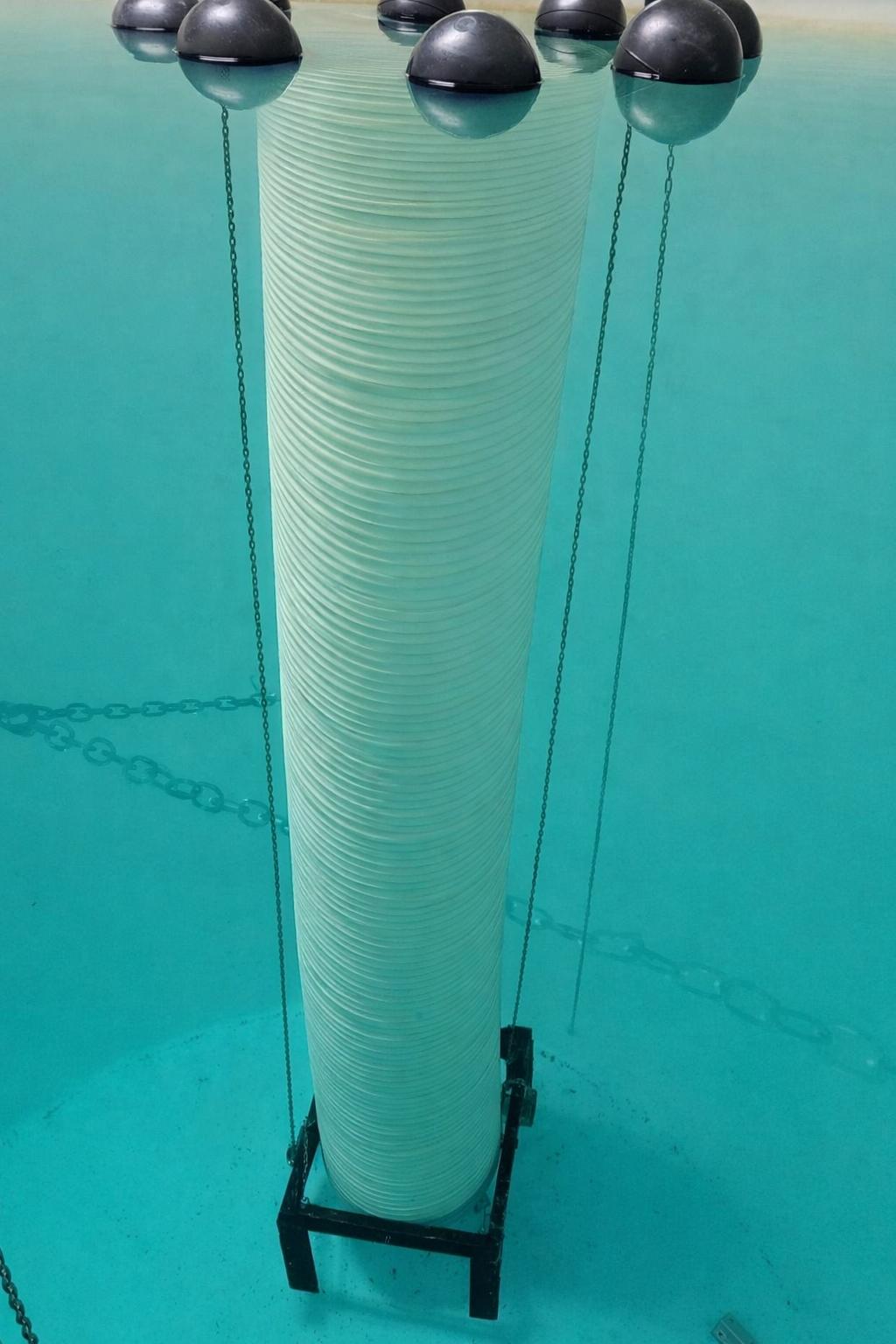
Stellar Waterworks systems are engineered for any tank, any water quality condition, and any THM challenge. Laser-pierced aeration holes produce the smallest possible air bubbles, dramatically increasing total bubble surface area while using minimal airflow and HP. This maximizes air-to-water contact inside the aerated zone within the hose, promoting efficient volatilization of THM compounds.
THMs are reduced through a combined mechanism: fine-bubble aeration within the hose, water breaching the surface, and high-volume mixing that generates ripples and wave action across the tank surface. This layered approach enhances stripping while simultaneously eliminating stratification and stagnant zones that contribute to ongoing formation.
By improving full-volume circulation and increasing controlled air exchange, the system addresses both sides of the equation—limiting the conditions that create THMs and actively reducing existing concentrations. The result is lower formation potential, more stable disinfectant residual management, and improved water quality consistency throughout the distribution system.
Energy Saving for VOC Removal
Volatile Organic Compounds (VOCs) are commonly removed from drinking water through aeration because of their tendency to readily volatilize. However, many conventional stripping systems rely on large blowers, high airflow rates, and extended runtimes to achieve compliance. When air transfer efficiency is low, operators are forced to compensate with more energy—driving up electrical costs and accelerating equipment wear.
Energy-efficient VOC removal depends on maximizing mass transfer while minimizing airflow. The smaller the bubble and the greater the contact area between air and water, the more effective the stripping process becomes per unit of air introduced.
Modular airflow control allows operators to distribute air precisely through each hose, scaling performance based on tank size, or seasonal variation. By eliminating over-aeration and unnecessary runtime, utilities can significantly reduce blower energy consumption while maintaining treatment effectiveness.
The result is a VOC removal strategy that achieves strong stripping performance with lower airflow, reduced electrical demand, and long-term operational savings—without sacrificing compliance confidence.
Ensure Regulatory Compliance
Regulatory compliance for disinfection byproducts such as THMs and contaminants like VOCs requires more than occasional corrective action. Under Stage 2 DBP requirements and federal drinking water standards, utilities must demonstrate consistent performance across varying water ages, temperatures, and demand cycles. These regulations exist to protect public health, as prolonged exposure to certain DBPs and VOCs has been linked to increased long-term health risks. Exceedances often occur not because treatment at the plant failed, but because conditions inside storage infrastructure allowed contaminants to form or persist.
Seasonal stratification, fluctuating tank levels, and uneven circulation can create compliance vulnerability. Even well-operated systems can experience localized exceedances when hydraulic conditions shift, potentially exposing portions of the distribution system to elevated contaminant levels. Sustainable compliance therefore depends on maintaining consistent mixing, stable aeration performance, and reliable contaminant removal regardless of operational variability.
Stellar Waterworks systems are engineered to deliver predictable performance under real-world conditions. The Nova system floats at a consistent operating depth regardless of water level, maintaining optimal aeration placement through filling and drawdown cycles. With no moving parts inside the tank and the ability to operate safely across all water levels, the system provides long-term reliability while supporting continuous mass transfer efficiency and preventing performance losses caused by fluctuating submergence.
Laser-pierced aeration holes generate uniform fine bubbles, maximizing contact surface area while maintaining controlled airflow. Combined with full-volume mixing and surface agitation, this approach limits THM formation potential and enhances VOC stripping throughout the entire tank—not just localized zones—helping maintain water quality that meets both regulatory and public health expectations.
The result is not simply contaminant reduction—but compliance stability. By combining hydraulic optimization, precision aeration, and operational reliability, utilities gain greater confidence in protecting public health while meeting regulatory limits and reducing the need for reactive corrective measures.
Protect Infrastructure and Distribution Systems
Protecting infrastructure is a critical component of long-term water system performance. While THMs and VOCs are often viewed primarily as compliance and health concerns, the conditions that allow them to form or persist—excessive water age, stratification, and stagnant zones—can also accelerate degradation within storage tanks and distribution systems.
When water remains stagnant, disinfectant residuals decay unevenly, creating chemical imbalances that promote biological activity, nitrification, and sediment accumulation. These conditions contribute to corrosion, scaling, and biofilm growth inside tanks and pipelines, gradually weakening protective coatings, increasing pipe deterioration, and raising the risk of leaks or main breaks.
Inconsistent circulation can also destabilize distribution systems. Short-circuiting within tanks allows aged water to re-enter the system, causing fluctuating disinfectant residuals and chemical variability that place additional stress on pipes, valves, and fittings—particularly in aging infrastructure.
Stellar Waterworks systems reduce these risks by improving full-volume circulation and minimizing stagnant zones. Installation within the tank’s short-circuit path helps maximize hydraulic efficiency and promote uniform turnover, stabilizing disinfectant residuals while limiting conditions that contribute to corrosion and biofilm development.
The equipment contains no moving parts inside the tank and requires no headspace, allowing installation without modifying existing tank structures. The flexible floating hose design adapts to changing water levels without creating stress points or interfering with coatings or structural components.
The result is more than improved water quality—it is infrastructure preservation. By stabilizing tank hydraulics and reducing corrosive and biologically favorable conditions, utilities can extend the life of storage assets, protect distribution piping, and reduce long-term repair costs while maintaining reliable system performance.